Punjab Introduces Biometric Verification for Birth, Death and Marriage Certificates
 Follow us on Facebook
 Join our WhatsApp Channel
 Subscribe on YouTube
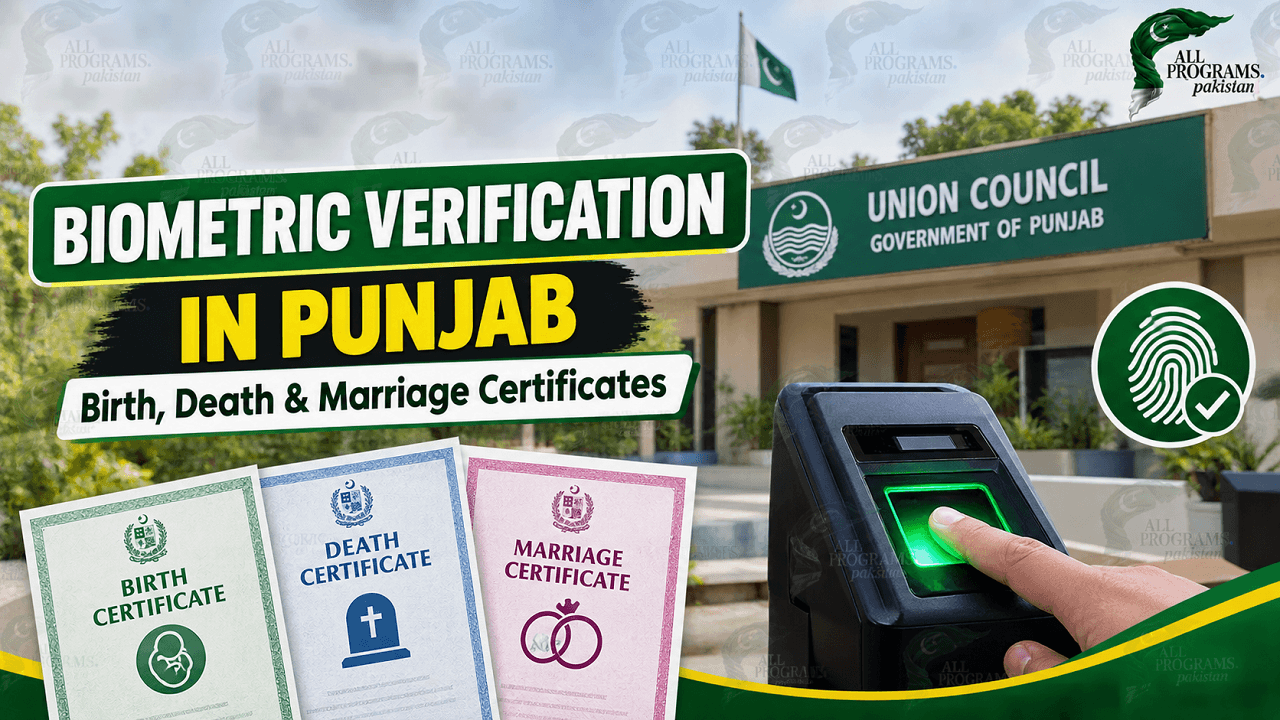
The Punjab government has introduced a biometric verification system for the registration and issuance of birth, death and marriage certificates through union councils. The new system aims to prevent fake registrations, improve transparency and make the civil registration process more reliable for citizens.
The new system was inaugurated in Sheikhupura on October 16, 2026, by Punjab Local Government Minister Zeeshan Rafique. It has been developed jointly by the Local Government Department and the National Database and Registration Authority (NADRA).
Quick Summary
- Province: Punjab
- New system: Civil Registration Management System (CRMS)
- Verification: Biometric verification against NADRA’s database
- Certificates covered: Birth, death and marriage certificates
- Inauguration date: October 16, 2026
- First launch location: Sheikhupura
- Expansion plan: All union councils across Punjab in phases
What Is the New Biometric Verification System in Punjab?
The new Civil Registration Management System (CRMS) introduces biometric verification into the process of registering vital events and issuing related certificates at union councils.
Under the new arrangement, biometric verification against NADRA’s database will be required before certificates are issued. The purpose is to help authorities verify identities, prevent fraudulent registrations and reduce the chances of fake certificates being issued.
The system is part of the Punjab government’s “Digital Punjab, Transparent Punjab” initiative, which aims to improve public services through digital systems and more transparent procedures.
Which Certificates Will Require Biometric Verification?
The announced system covers three major types of civil registration certificates issued through union councils.
1. Birth Certificate
Birth registration records a child’s birth and provides an official record of the event. Under the new system, biometric verification will form part of the certificate issuance process as prescribed by the authorities.
2. Death Certificate
Death registration provides an official record of a person’s death. The new verification system is intended to strengthen the reliability of these records and help prevent fraudulent registrations.
3. Marriage Certificate
Marriage registration provides an official record of a marriage. The new system will introduce biometric verification into the certificate issuance process at participating union councils.
Important: The announcement does not specify the exact biometric requirements for each certificate type. Applicants should confirm the applicable procedure with their union council.
Why Has the Punjab Government Introduced This System?
According to Local Government Minister Zeeshan Rafique, the initiative is intended to make public services more transparent, accessible and reliable.
The main expected benefits include:
- Prevention of fake certificates: Biometric verification is intended to help prevent fraudulent registrations and certificate issuance.
- Improved transparency: Digital verification can help strengthen checks within the civil registration process.
- More reliable records: Verification against NADRA’s database is intended to improve confidence in identity-related records.
- Reduced opportunities for corruption: The government says the initiative aims to reduce reliance on recommendations and bribery.
- Better public services: The system is intended to support more accessible and transparent services at the local level.
You may also like: NADRA NICOP Online Apply 2026: Documents, Fee and Complete Process
How to Apply for Birth, Death or Marriage Certificates in Punjab
If you need a birth, death or marriage certificate, the first step is to contact the relevant union council and confirm its current registration procedure.
The government has announced the new verification system, but the available announcement does not provide a complete application procedure, a list of required documents, an online application link or a fee schedule. Therefore, applicants should not assume that the entire process has moved online.
Step 1: Contact the Relevant Union Council
Visit or contact the union council responsible for the relevant registration. Ask whether the new CRMS and biometric verification system is operational there.
Step 2: Confirm the Required Documents
Ask the union council which documents are required for your particular certificate. Requirements may differ for birth, death and marriage registration, as well as for new registrations and corrections to existing records.
Step 3: Complete the Registration Procedure
Submit the required information and documents according to the union council’s instructions. Follow the applicable biometric verification requirements communicated by the relevant office.
Step 4: Pay the Applicable Fee, If Required
Confirm the official fee, if any, directly with the union council before making a payment. The announcement of the biometric system does not specify any new fee or confirm that existing charges have changed.
Step 5: Collect Your Certificate
Ask the union council about the expected processing time, collection method and any additional verification required before your certificate is issued.
Important notice: The steps above are general guidance for approaching the relevant union council, not a newly published official CRMS application procedure. Confirm the latest requirements locally before submitting an application.
Will the New System Be Introduced in All Union Councils?
Yes. According to the announcement, the Punjab government plans to introduce the system in all union councils across the province in phases.
However, the government has not specified a complete rollout schedule or confirmed the date on which every union council will begin using the system. Residents should check with their local union council to confirm whether biometric verification is currently available at their location.
What Should Citizens Do Before Applying?
If you are planning to obtain a birth, death or marriage certificate, keep these points in mind:
- Contact your relevant union council before visiting.
- Confirm whether the new biometric verification system has been implemented at that office.
- Ask for the official list of required documents for your certificate type.
- Confirm the applicable fee and expected processing time.
- Use official channels and obtain a receipt for any payment made.
- Avoid agents who promise guaranteed approval or offer to bypass verification requirements.
- Do not share sensitive identity information or biometric data with unauthorized individuals.
You may also like: MOFA Online Attestation 2026: How to Apply in Pakistan
Frequently Asked Questions (FAQs)
1. What is the new biometric verification system in Punjab?
It is a new feature of the Civil Registration Management System (CRMS) that requires biometric verification against NADRA’s database before the covered birth, death and marriage certificates are issued.
2. When was the system launched?
The system was inaugurated in Sheikhupura on October 16, 2026, by Punjab Local Government Minister Zeeshan Rafique.
3. Which department developed the new system?
The system was developed through collaboration between the Punjab Local Government Department and the National Database and Registration Authority (NADRA).
4. Is biometric verification being introduced across Punjab?
The government plans to introduce the system in all union councils across Punjab in phases. A complete rollout date has not been announced.
5. Can I apply for a certificate online?
The announcement does not confirm a new online application facility for these certificates. Contact your union council to learn about the application method currently available in your area.
6. What documents are required for biometric verification?
The announcement does not provide a definitive document checklist. Requirements should be confirmed with the relevant union council according to the type of certificate and registration involved.
7. Has the government announced a new fee for these certificates?
No new fee is specified in the announcement. Applicants should confirm the applicable official charges with their union council.
8. What is the main purpose of biometric verification?
The main purpose is to help prevent fraudulent registrations, reduce the issuance of fake certificates and improve transparency in civil registration services.
Final Words
The introduction of biometric verification for birth, death and marriage certificates is an important step towards strengthening civil registration services in Punjab. By linking verification with NADRA’s database, the provincial government aims to reduce fraudulent registrations and improve transparency.
As the system is introduced in phases, citizens should confirm the latest requirements with their local union council before applying. Further details about the rollout schedule, application procedure, documents and fees should be confirmed through official announcements.
Disclaimer: AllPrograms Pakistan is an independent informational platform and is not affiliated with the Government of Punjab, NADRA or any government department. We do not process certificate applications. Information in this article is based on the announcement dated October 16, 2026. Always confirm official requirements with the relevant authority.