
Maryam Nawaz Ration Card Programme: Rs 43.2 Billion Expansion 2026
 Follow us on Facebook
 Join our WhatsApp Channel
 Subscribe on YouTube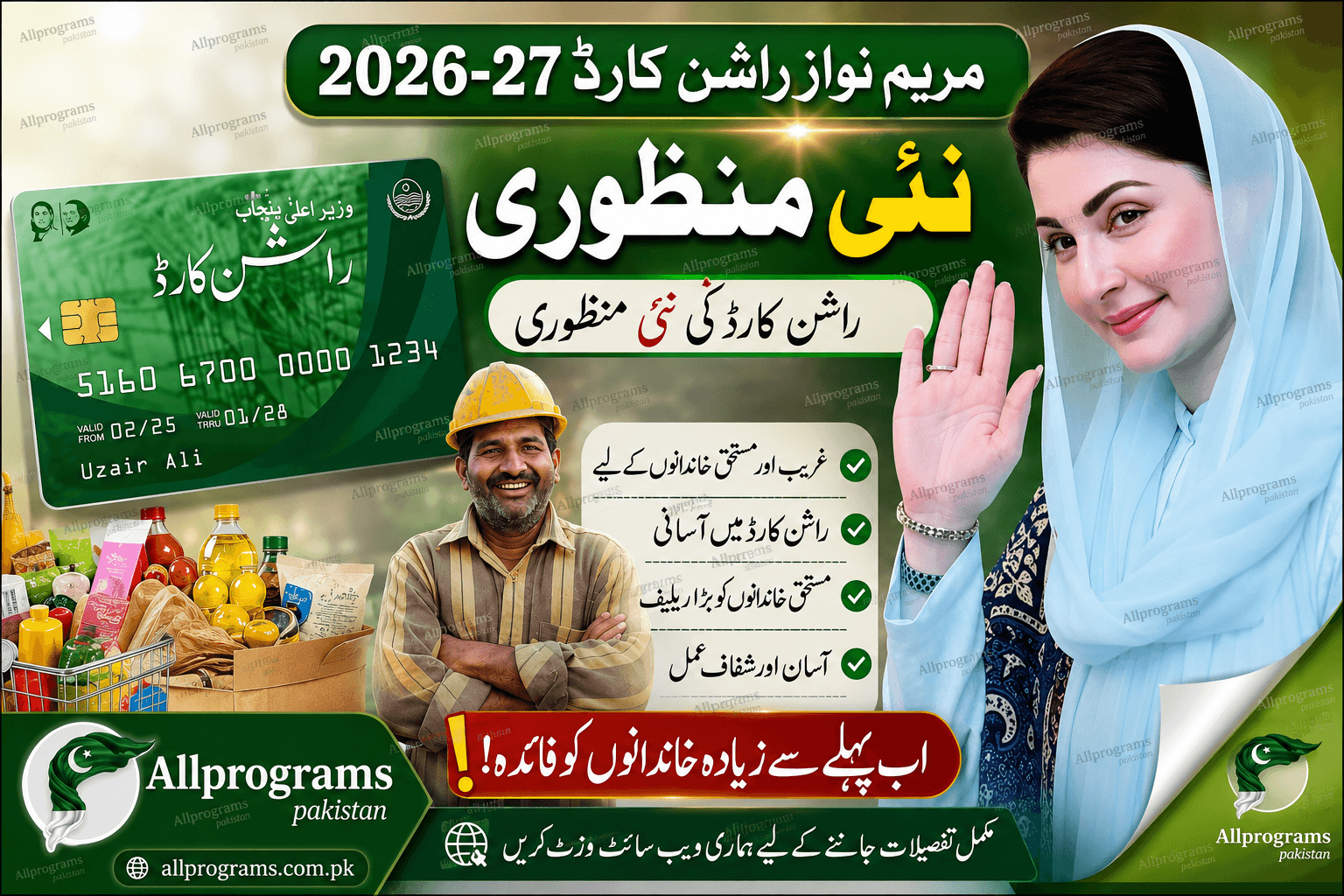
A daily-wage labourer in Punjab — maybe someone who mixes cement on a construction site, or stitches clothes in a small factory, or sweeps the streets before sunrise every single day. By the end of the month, after rent, after school fees, after electricity bills, there is barely anything left for the kitchen. Flour, oil, pulses, sugar — the most basic things a family needs to eat — have become harder and harder to afford.
This is exactly the reality the Punjab Government says it is trying to fix through the Maryam Nawaz Ration Card Programme — and on July 27, 2026, Chief Minister Maryam Nawaz Sharif announced that this programme is not just continuing, it is expanding in a big way.
In this article, I’ll explain everything that has officially been announced about this expansion — how much money is involved, how many workers are benefiting, how the card actually works, and what is still unclear or not yet officially detailed (I’ll be upfront about that too, instead of guessing).
In short: The Punjab Government has approved an additional Rs 43.2 billion for the 2026-27 financial year under the Maryam Nawaz Ration Card Programme, on top of the Rs 28 billion already given to 1.2 million registered workers. Through this card, eligible workers get Rs 3,000 worth of essential groceries every month from over 62,000 shops across Punjab.
What Is the Maryam Nawaz Ration Card Programme?
The Maryam Nawaz Ration Card Programme is a welfare initiative run by the Government of Punjab, aimed specifically at registered workers — meaning labourers and employees who are officially registered with the province’s labour department system. Instead of giving out cash, the government gives these workers a physical ration card, which they can use every month to collect essential food items worth Rs 3,000 from a wide network of approved shops across Punjab.
The idea is simple: workers who are already contributing to the economy through their labour should not have to worry about whether their family can afford basic food items every month. Instead of the value shrinking due to inflation, the government provides a fixed monthly allowance in the form of groceries, delivered through a card system that is easy for workers to use at their local shop.
The Big News — Why This Announcement Matters
On July 27, 2026, CM Maryam Nawaz Sharif presided over a review meeting on the programme, where Punjab Labour Minister Manshaullah Butt and Labour Secretary Danish Afzal gave her a detailed briefing on how the scheme has performed so far. What came out of that meeting was a significant expansion, not just a routine update.
Here’s exactly what was confirmed:
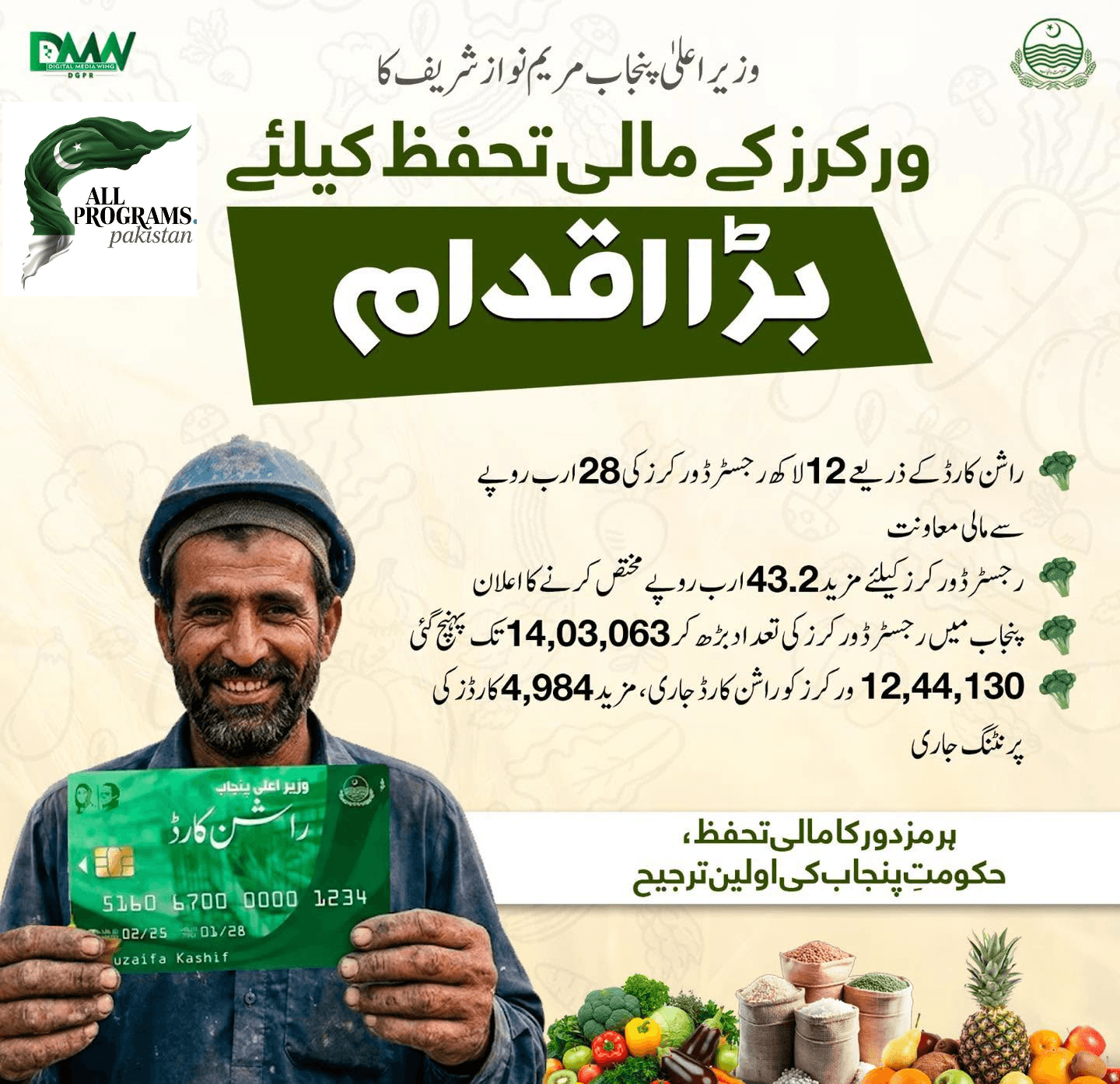
✅ Rs 28 billion has already been disbursed to 1.2 million registered workers under the programme so far
✅ CM Maryam Nawaz has now approved an additional Rs 43.2 billion for registered workers during this year
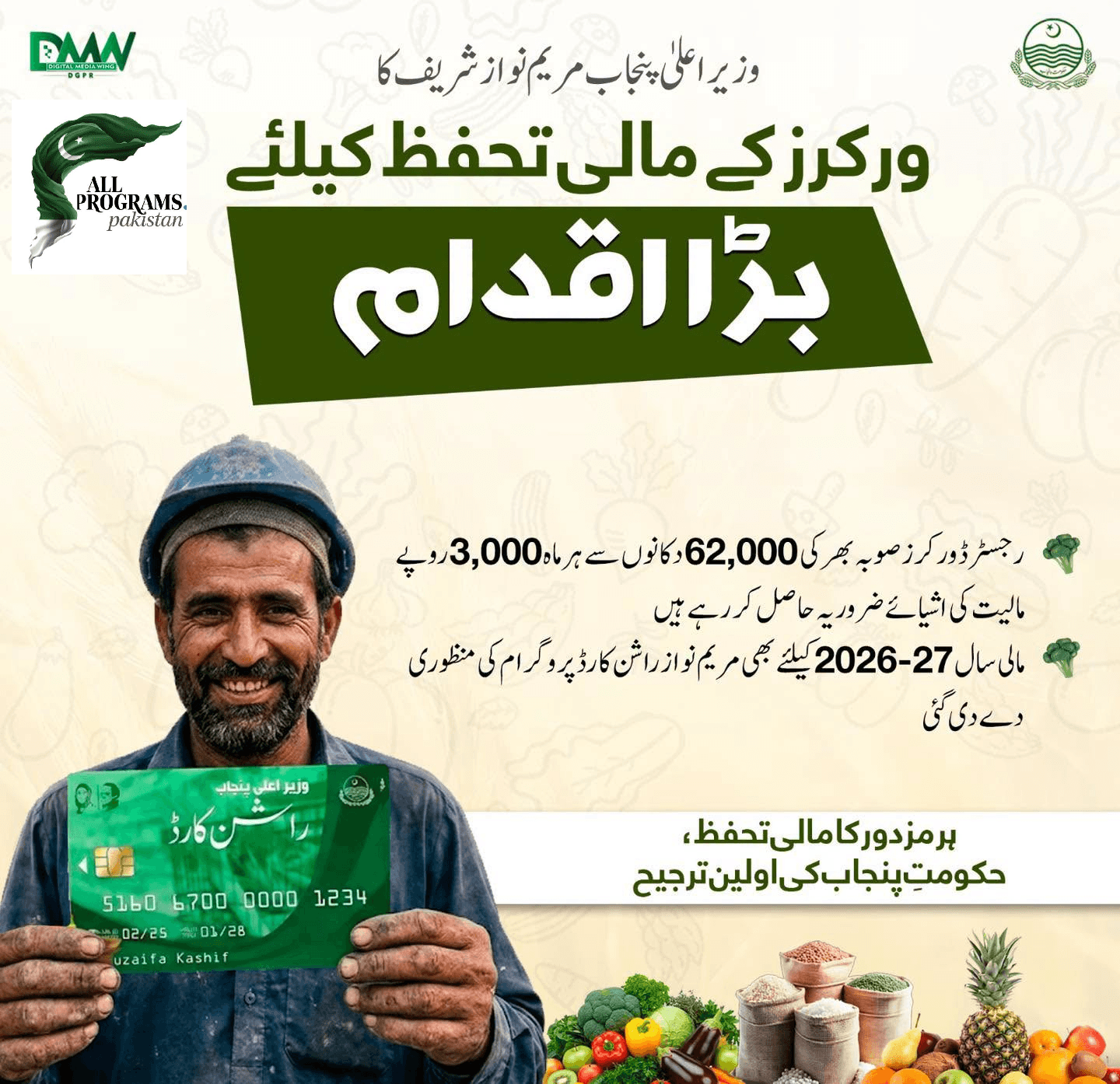
✅ The Ration Card Programme has been officially approved to continue for the financial year 2026-27, meaning it is not stopping — it is being funded for a full new year
✅ The chief minister has directed officials to further increase the number of registered workers across the province, so that even more families can be brought into the programme
This is important, because it tells you two things clearly: first, the government considers this programme successful enough to keep funding at a larger scale. Second, if you are a worker who is not yet registered, the door is deliberately being kept open and expanded — this is exactly the right moment to make sure you or your family members are registered.
The Numbers Behind the Programme
Who Can Benefit From This Programme?
Based on the official statement, this programme is meant for registered workers in Punjab. This includes labourers and employees who are part of the province’s official worker registration system, as well as workers connected to specific government-linked programmes — for example, the official statement specifically confirms that more than 100,000 workers associated with the Suthra Punjab programme (Punjab’s cleanliness/sanitation initiative) are also receiving these ration cards.
If you already work in a registered capacity — for example, in a factory, on a construction site, or under a government-linked labour scheme — and you have gone through the official worker registration process with the Punjab Labour Department, you are the kind of person this card is designed for.
Honest note: The official press release this article is based on does not specify the exact eligibility criteria, registration document list, or online application process for a completely new worker who wants to register for the first time. I don’t want to guess or invent these details for you, because getting them wrong could waste your time or cause confusion. The safest next step if you are not yet registered is to contact your nearest Punjab Labour Department office or reach out through the contact details below, and ask directly how to complete your worker registration so you can be considered for the Ration Card Programme.
How the Ration Card Actually Works
Once a worker is registered and issued their Maryam Nawaz Ration Card, here is how the benefit works in practice, based on the official statement:
- The card carries a fixed value of Rs 3,000 per month
- This amount can be used to purchase essential food items (asaas-e-zaroorat / everyday necessities)
- The card is accepted at over 62,000 approved shops spread across the province, meaning most workers should have a participating shop reasonably close to where they live
- This is a recurring monthly benefit, not a one-time payment — as long as the programme continues and the worker remains registered, the monthly value keeps coming
What CM Maryam Nawaz Said
During the review meeting, the chief minister was direct about why this programme matters to her personally. In her own words, translated from the official Urdu statement:
“Ensuring the financial protection of every labourer and every worker is a responsibility I take seriously. We will keep increasing the number of workers included in the Ration Card project.”
— CM Maryam Nawaz Sharif, July 27, 2026 (translated from the official Urdu statement)
She also directed her officials to actively work on increasing the number of registered workers in Punjab, which strongly suggests that the government wants this programme’s reach to keep growing over the coming months, not stay limited to the workers already registered today.
The Suthra Punjab Connection
One detail worth highlighting on its own: more than 100,000 workers linked to the Suthra Punjab programme — the province’s sanitation and cleanliness workforce — are also benefiting from these ration cards. This shows that the Ration Card Programme is not limited to one single type of job. Workers from different government-linked initiatives across Punjab are being folded into this same benefit system.
Common Questions Workers Have
Q: Do I have to pay anything to get this ration card?
- Based on everything officially stated, this is a government welfare benefit for registered workers — there is no mention anywhere of workers being charged a fee for the card itself. Never pay any individual or “agent” who asks for money to arrange a ration card for you.
Q: Is this a one-time payment or a monthly benefit?
- It is a recurring monthly benefit. The Rs 3,000 value is meant to be used every month, and the government has now approved funding to continue this through the 2026-27 financial year.
Q: I am a worker but I’m not registered yet. Can I still get this card?
- The chief minister has specifically directed officials to increase the number of registered workers, which means the programme is actively looking to bring in more people. Your best step is to contact the Punjab Labour Department directly to ask about the registration process for your specific type of work.
Q: Where can I use my ration card?
- At any of the over 62,000 approved shops located across Punjab that are part of this programme’s shop network.
Q: Is there a deadline to register or apply?
- No deadline has been mentioned in the official statement. Since the programme has just been approved to continue for a full new financial year (2026-27) and the government wants to add more workers, it appears to be an ongoing, growing programme rather than one with a fixed cut-off date. We will update this article if any official deadline is announced.
A Word of Caution
Whenever a government welfare scheme becomes widely known, fake agents and middlemen tend to appear, promising to get people registered “faster” for a fee. Please remember: government worker registration and ration card issuance should never require you to pay a private individual. If anyone asks you for money to arrange your card, treat it as a warning sign, and verify directly with your local Labour Department office instead.
Official Source and Contact
- Issued By: Directorate General Public Relations, Government of the Punjab, Lahore
- Contact: +92 42 99201390-1-2
- Officials Involved: Punjab Labour Minister Manshaullah Butt, Labour Secretary Danish Afzal
Final Words — From AllPrograms Pakistan
For a daily-wage worker in Punjab, Rs 3,000 worth of groceries every month is not a small thing — it can be the difference between a household eating properly and a household going without. The fact that the Punjab Government has chosen to add another Rs 43.2 billion to this programme, on top of what has already reached 1.2 million families, shows this isn’t just a one-time announcement — it’s becoming a long-term commitment.
If you are a registered worker in Punjab and haven’t received your card yet, or if you know someone who might qualify but hasn’t registered, don’t wait quietly. Reach out to your local Labour Department office and ask directly where your registration stands.
Share this article with your co-workers, your community WhatsApp groups, and anyone in your circle who works hard every day and could use this support. Many people simply don’t know this benefit exists for them yet.








Muja apna ghr chiya please
We pray that ALLAH blesses you with a home soon.
Please read our guide: Apni Chhat Apna Ghar Scheme 2026 – Full Guide & Apply Now.
You can apply through the official portal: **https://acag.punjab.gov.pk/**. If you meet the eligibility criteria, complete your application there. Best of luck!